
About Angel Flights LLC
A coordination desk, not a call center. One person owns your case from the first call to the receiving bed.
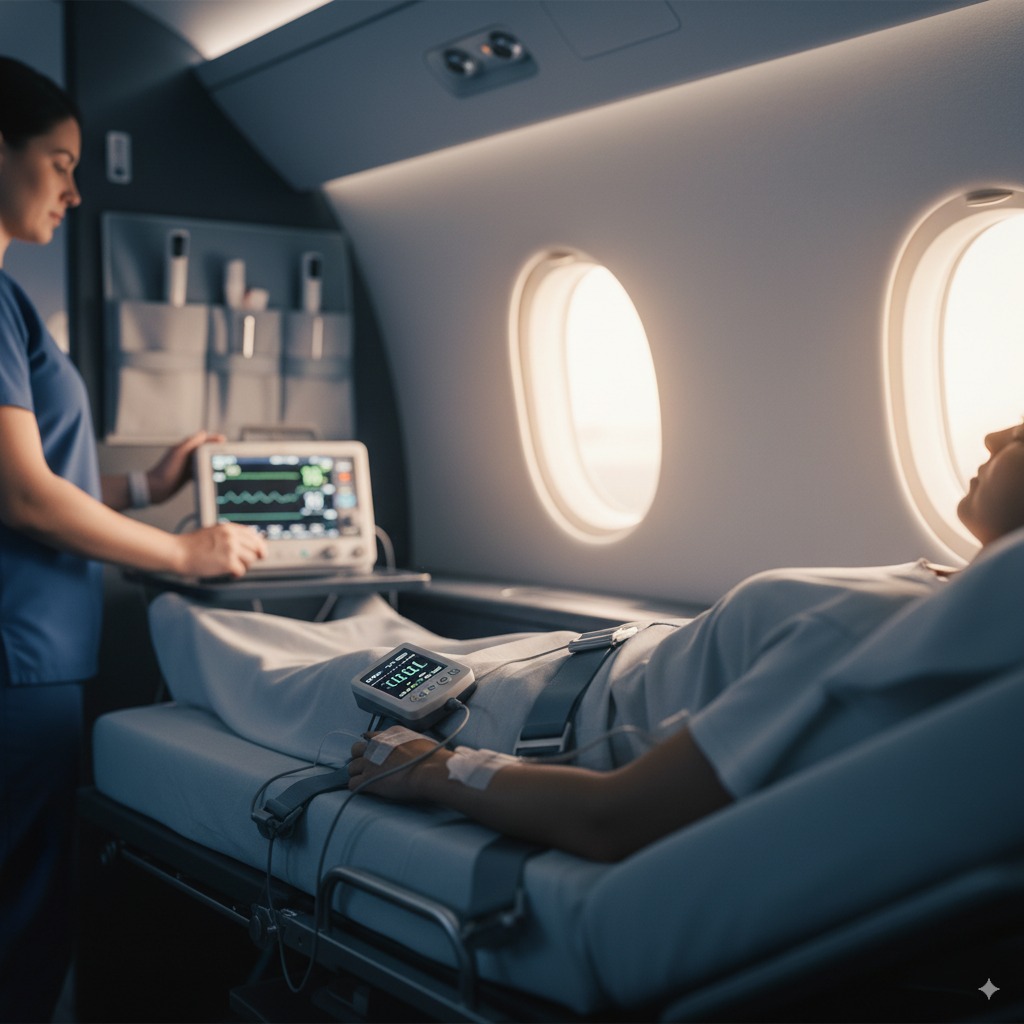
Angel Flights LLC arranges air medical transport for patients moving into, out of, and across California. We are a coordination company: we do not sell you an aircraft we happen to own, because we do not own one. That independence is the point. When a family calls about a transfer from a coastal hospital to a transplant program inland, the aircraft that fits is chosen on range, cabin configuration, and crew credentials, not on what is currently parked and unbooked.
California makes that choice matter more than most states. A mission out of the far north faces terrain, weather, and long ground legs; a mission out of the Los Angeles basin faces congested airspace and slot pressure; a mission out of the desert faces summer density altitude that changes what an aircraft can lift. Coordinators who work these routes weekly plan around all three instead of discovering them on departure day.
How a case is actually run
Intake begins with the clinical picture: diagnosis, current stability, lines and drips, ventilator or oxygen requirements, weight and mobility, and whether the sending physician has already secured acceptance at the destination. From that we determine whether the patient needs a dedicated medical jet, a turboprop that can use a shorter local runway, a commercial medical escort, or an airline stretcher installation.
The coordinator then builds the mission backwards from the receiving bed. Ground ambulance at the destination is booked before the aircraft leaves, because a jet that lands with no waiting transport has not completed a transfer. Bed-to-bed means the plan is measured room to room, and someone is accountable for every link between them.
Crews, carriers, and equipment
Flight crews are credentialed for the acuity they are asked to manage: critical care transport nurses, flight paramedics, respiratory therapists on ventilator missions, and neonatal teams with isolette experience for infant transfers. Carriers are vetted on certification, maintenance history, insurance, and medical configuration before they ever appear as an option on a case.
Aircraft cabins are configured for the patient rather than the schedule: stretcher mounting, cardiac monitoring, suction, oxygen capacity sized to the flight time plus reserve, infusion pumps, and a medication inventory selected against the diagnosis. A family member travels along whenever the cabin and clinical picture allow.
Coverage across the state
Every California county has a coordination page describing local departure fields and the facilities we work with there. Start from the county index, or review the full air medical transport service list.